Gardening Harlesden: Recycling and Sustainability for Greener Gardens
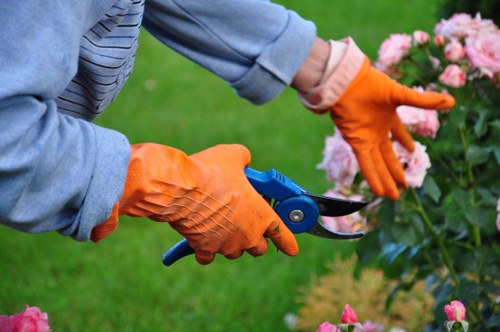 Gardening Harlesden is committed to creating an eco-friendly waste disposal area and a sustainable rubbish gardening area that serves residents, community gardeners and local allotments. Harlesden gardening initiatives are designed to reduce landfill, encourage reuse and widen local participation in waste separation. Our plan balances practical on-site solutions with borough-wide systems so that every garden can be part of a low-carbon circular approach.
To measure progress we set a clear recycling percentage target: 60% diversion of garden and household waste from landfill within five years. This target covers organic composting, dry recycling and reuse of bulky items. Gardens in Harlesden will contribute by increasing composting rates, expanding textile and small-electrical reuse streams, and improving signage at collection points so that separation is simple for volunteers and residents.

Practical on-site solutions
Small sustainable rubbish gardening areas are laid out to include segregated bays for green waste, paper and cardboard, glass and cans, and designated re-use shelves for pots, tools and soil sacks. The borough’s approach to waste separation combines kerbside dry recycling with separate food and garden waste collections; our sites mirror that system so material flows into the correct local route.Local transfer stations and collection routes
Harlesden’s network links community gardens to local transfer stations and the borough recycling facilities that process separated streams. We work with transfer stations that accept garden waste for composting, mixed dry recyclables for sorting, and bulky items for reuse. These transfer hubs shorten haulage distances and reduce emissions from transport.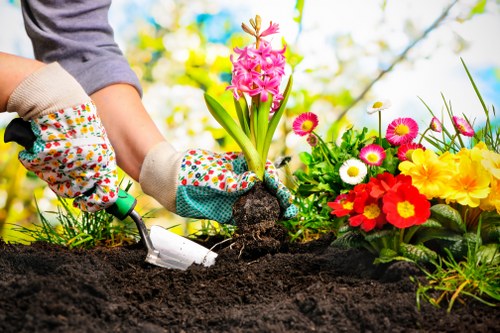 Low-carbon vans and micro-logistics are central to our collection model. Gardening Harlesden uses electric vans and plug-in hybrid vehicles for regular pickups, and where access is tight we deploy cargo bikes or low-emission tricycles. By prioritising low-carbon vans and micro-vehicles we cut particulate pollution on residential streets while maintaining reliable removal of garden and household recycling.
Partnerships with charities underpin reuse and community benefit. We partner with organisations such as Groundwork and local reuse charities plus redistribution projects to ensure that usable gardening tools, pots and surplus plants are refurbished and passed to schools, community groups and residents on low incomes. Food redistribution partners reduce edible waste while community projects turn surplus compostable material into soil boosts for civic planting.
To support residents and volunteers, Gardening Harlesden operates clear signage and frequent collections so materials are stored only briefly in the eco-friendly waste disposal area. Colours and icons match borough labelling — green for garden waste, brown for food, blue/gray for dry recycling — reflecting the boroughs' approach to waste separation and making it intuitive for everyone who uses the site.
Types of recycling activity on site
Our sustainable rubbish gardening area supports a range of local activities that feed into circular loops:- Garden and organic composting — accepted for industrial composting or community windrow processing.
- Kerbside-equivalent dry recycling — paper, card, glass, cans and certain plastics sorted and sent to local material recovery facilities.
- Food waste collection — small community food bins for peelings and plate waste redirected to anaerobic digestion or composting.
- Bulky reuse — pots, planters and tools that are repaired or redistributed through charity partners.
- Textile and small WEEE collection — textiles and small electricals collected periodically for specialist processing.
We emphasise training for volunteers and site coordinators: simple checklists, quick audits and seasonal reviews help keep contamination low. Gardening Harlesden runs periodic swaps and repair cafes (tool maintenance sessions) in partnership with local groups so that useful items remain in circulation rather than entering the waste stream.

Monitoring, reporting and community outcomes
Progress is tracked against the recycling percentage target using tonnage inputs at transfer stations, collection frequency logs for the low-carbon fleet, and surveys of reuse distribution through our charity partners. Regular reports highlight reductions in garden waste sent to landfill, increases in compost returned to community beds, and CO2 savings from low-emission collection vehicles.Final note: Gardening Harlesden’s integrated approach — combining easy-to-use eco-friendly waste disposal areas, a practical sustainable rubbish gardening area layout, close links to local transfer stations, partnerships with charities, and a fleet of low-carbon vans — creates a resilient model for greener urban gardening. By aligning local action with borough waste separation systems and a clear 60% recycling target, our community can grow greener gardens while cutting waste and emissions.